What Is Programmatic SEO (and How to Use It in 2026)
Last Updated on October 13, 2026 by Corey Fox
The short answer
Programmatic SEO is a way to scale organic traffic by building structured pages from data instead of writing each page manually.
It matters in 2026 because search demand is fragmented, intent is specific, and the sites that win are the ones that can meet that intent consistently without relying on brute force content production.
This is not about shortcuts. It is about systems.
Why programmatic SEO exists in the first place
Most people misunderstand why programmatic SEO works.
They think it is about publishing a lot of pages. That is not the point.
Programmatic SEO exists because search behavior is repetitive.
People do not search in infinite creative ways. They search using patterns.
- Best X in Y
- X near me
- X for beginners
- X vs Y
- Cost of X in Y
Once you see those patterns, it becomes obvious that writing each page manually is inefficient. Not because writing is bad, but because the structure of the demand does not require unique thinking every time. It requires consistent coverage.
Programmatic SEO is the method that turns those patterns into an asset.
What programmatic SEO actually is
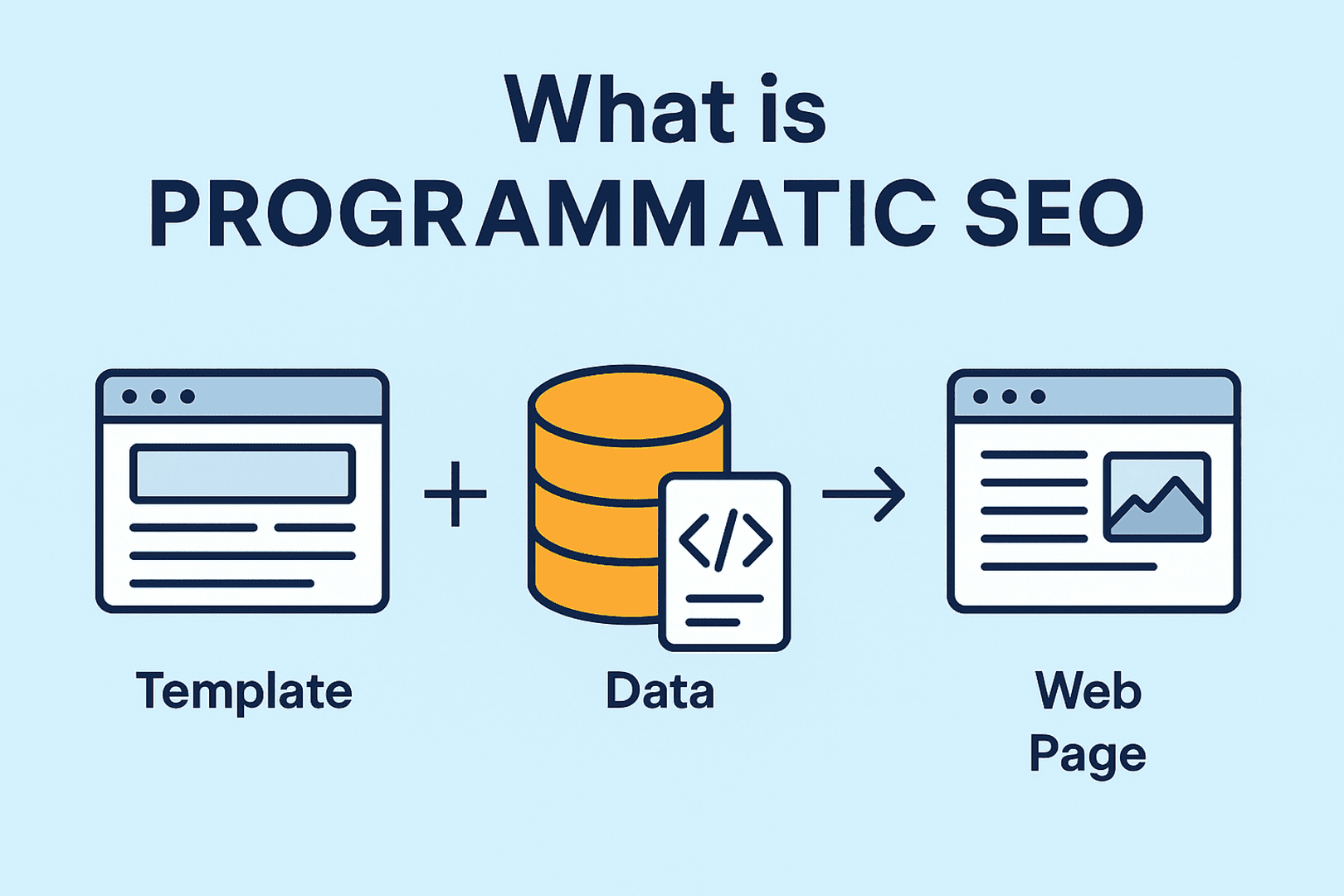
Programmatic SEO is the practice of creating many search-focused pages using:
- A structured dataset
- A repeatable page framework
- Rules that control quality and output
Each page targets a specific query, but all pages are built from the same underlying system.
This system is easier to understand visually than verbally.
Visual: How programmatic SEO works at a high level

If the data is weak, the pages fail.
If the template is weak, the pages fail.
If both are solid, the system compounds.
What programmatic SEO is not
This matters, because this is where most people get it wrong.
Programmatic SEO is not:
- Publishing thousands of empty pages
- Keyword stuffing templates
- Letting AI dump paragraphs into a CMS
- Hoping Google figures it out
Those tactics do not hold up anymore.
Search engines are good at detecting:
- Duplicate intent
- Thin value
- Artificial variation
- Pages created without a real reason to exist
Programmatic SEO only works when every page has a clear purpose.
Why programmatic SEO still works in 2026
Search has changed, but the fundamentals have not.
What changed:
- AI summaries
- Answer engines
- Entity understanding
- Higher quality thresholds
What did not change:
- People still search
- Intent is still specific
- Long-tail queries still convert
- Structured content is still easier to understand
Programmatic SEO works because it aligns with how machines interpret information and how humans consume it.
The three pillars of programmatic SEO
If you ignore any of these, the system breaks.
1. Search patterns
You are not targeting keywords. You are targeting query structures.
Good programmatic targets share:
- The same intent
- The same layout needs
- Different variables
If every page needs a different explanation, it is not a programmatic use case.
2. Data quality
Your pages are only as strong as the information behind them.
Strong datasets include:
- Real attributes
- Location-specific details
- Comparisons
- Constraints
- Contextual differences
Weak datasets create pages that all say the same thing.
Visual: Example of a programmatic dataset
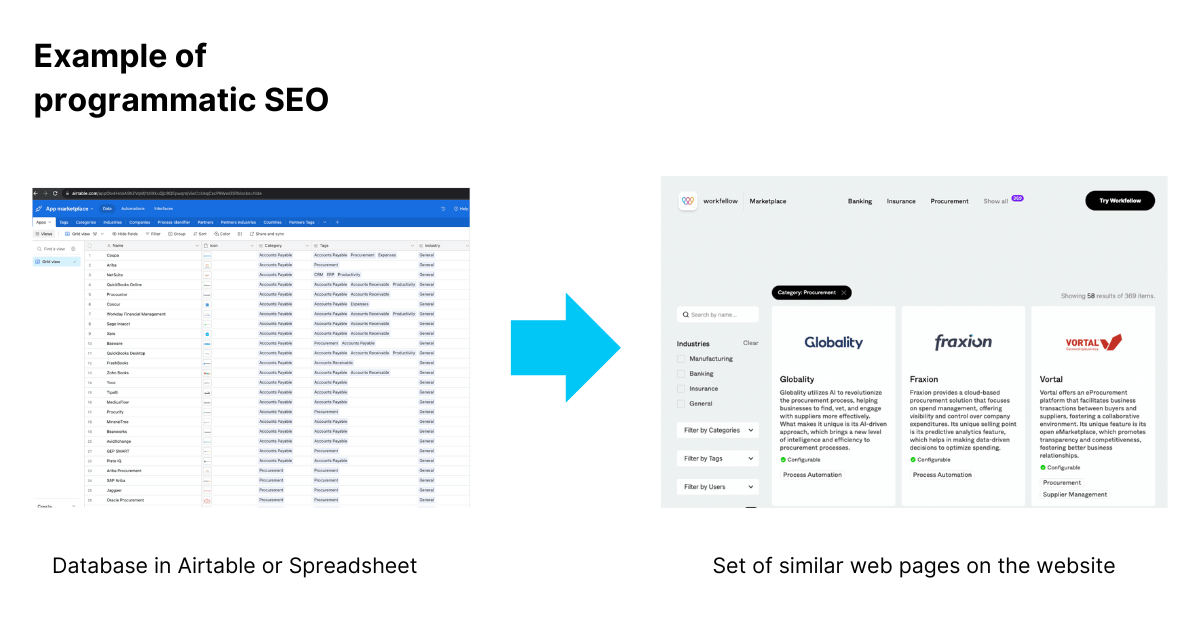
If you cannot answer “what makes this page different,” do not publish it.
3. Page structure
A programmatic page must feel intentional.
It should be obvious:
- Why the page exists
- Who it is for
- What question it answers
Templates are not the problem. Lazy templates are.
How programmatic SEO works step by step
Step 1: Identify repeatable search demand
You are looking for patterns, not isolated keywords.
Examples:
- Best personal injury lawyer in {city}
- CRM tools for {industry}
- Cost of {service} in {location}
- {software} integrations with {platform}
If the intent changes, the page type should change.
Step 2: Build the dataset before the pages
Before you design a single page, the dataset needs to exist.
For example, location pages should include:
- Population context
- Service availability differences
- Pricing ranges
- Local constraints
- Real distinctions
This is what prevents thin pages at scale.
Step 3: Design the page framework
Your template should answer the same core questions every time.
A strong framework usually includes:
- Clear headline
- Short contextual introduction
- Data-driven sections
- Practical FAQs
- Internal links
The structure should feel predictable, but not empty.
Step 4: Generate pages carefully
You do not need to publish everything at once.
Best practices:
- Only generate pages with real data
- Avoid placeholders
- Control indexation
Indexing everything is not a strategy. It is a liability.
Programmatic SEO and answer engines
In 2026, ranking is only part of the goal.
Your pages need to be easy to:
- Extract
- Summarize
- Quote
That means:
- Direct definitions
- Clear answers
- Structured FAQs
- Clean formatting
If a page cannot be summarized, it will be skipped.
Internal linking is not optional
Programmatic sites live or die by internal linking.
Each page should:
- Link upward to categories
- Link sideways to related pages
- Link downward to deeper explanations
Visual: Internal linking in a programmatic site
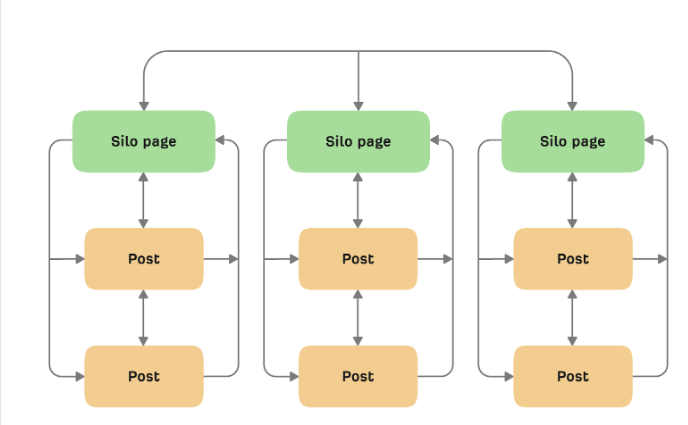
Without internal links, programmatic pages become islands.
Islands, a.k.a. orphan pages, do not rank.
Measuring success the right way
Do not judge programmatic SEO by rankings alone.
Better signals:
- Indexation rate
- Impression growth
- Assisted conversions
- Pages that lift other pages
Some pages exist to support the system, not to rank on their own.
That is expected.
Common mistakes that kill programmatic SEO
- Publishing before validating
- Using AI as the strategy
- Ignoring intent mismatches
- Letting templates go stale
Systems require maintenance.
When programmatic SEO is a bad idea
It is not a fit when:
- Every page requires an original opinion
- Demand is low and unpatterned
- Reliable data does not exist
In those cases, editorial content wins.
Who programmatic SEO is best for
- Local service businesses
- SaaS platforms
- Marketplaces
- Directories
- Comparison sites
- Structured information hubs
If you already have repeatable data, you are halfway there.
Final thoughts
Programmatic SEO is not about gaming search engines.
It is about respecting how search actually works.
People ask similar questions.
Search engines reward clarity.
Systems outperform one-off efforts over time.
Build it carefully, and it compounds quietly.
Rush it, and it fails loudly.