
Topic Clusters for SEO: What They Are & How to Build Them
Last Updated on December 23, 2025 by Corey Fox
Direct Answer
What a Topic Cluster Is (One Sentence Definition)
A topic cluster is a group of related pages organized around a central pillar page, connected through internal links to signal topical authority to search engines.
Why Topic Clusters Improve Rankings
Topic clusters improve rankings because they help Google understand depth, relevance, and authority across an entire subject instead of evaluating pages in isolation.
Quick Summary
Topic Clusters at a Glance
Topic clusters are a content structure where one main page covers a broad topic and multiple supporting pages cover specific subtopics in depth. All pages link together strategically.
Who Topic Clusters Are For
Topic clusters are for SEO professionals, content teams, founders, agencies, and anyone who wants predictable ranking growth instead of chasing single keywords.
Time and Resources Required
A strong topic cluster typically takes two to six weeks to plan, create, and optimize depending on competition and depth.
What Is a Topic Cluster?
Topic Cluster Definition (Plain English)
A topic cluster is a way of organizing content so Google sees your site as an authority on a topic, not just a collection of unrelated blog posts.
Instead of writing one article per keyword and hoping it ranks, you build a connected system of pages that work together.
What Problem Topic Clusters Solve
Most websites fail at SEO because they publish content randomly.
They chase keywords.
They publish disconnected posts.
They never build authority.
Topic clusters solve this by giving Google a clear structure that says this site knows this topic deeply.
Pillar Pages Explained
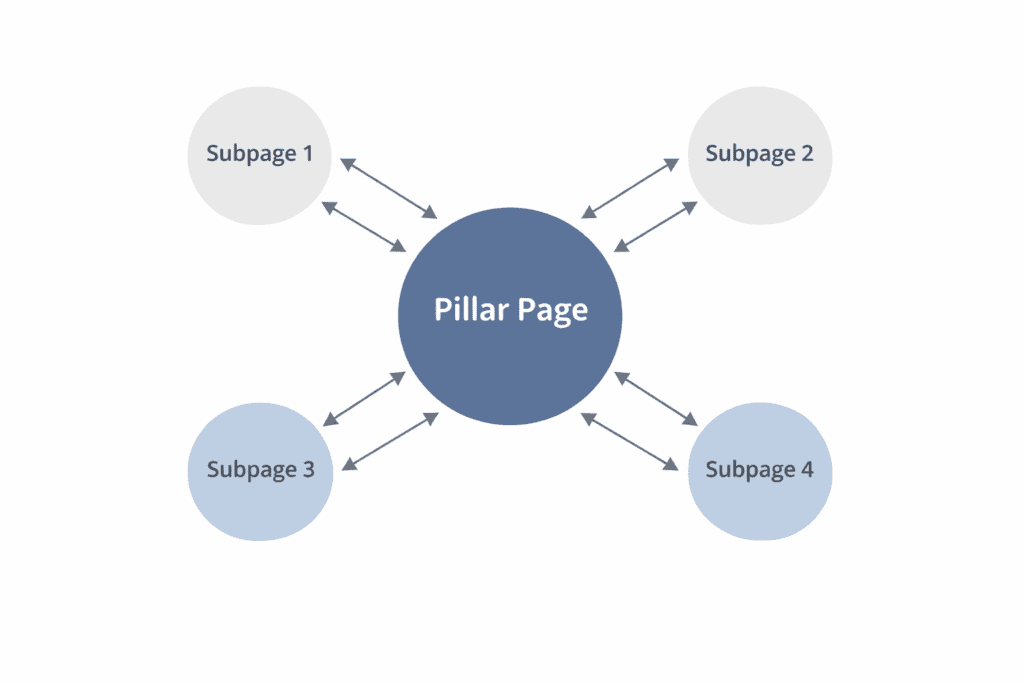
A pillar page is the main page of a topic cluster.
It covers the topic broadly.
It introduces all major subtopics.
It links out to every supporting page.
A pillar page is not a blog post.
It is an authority page.
Subpages (Spokes) Explained
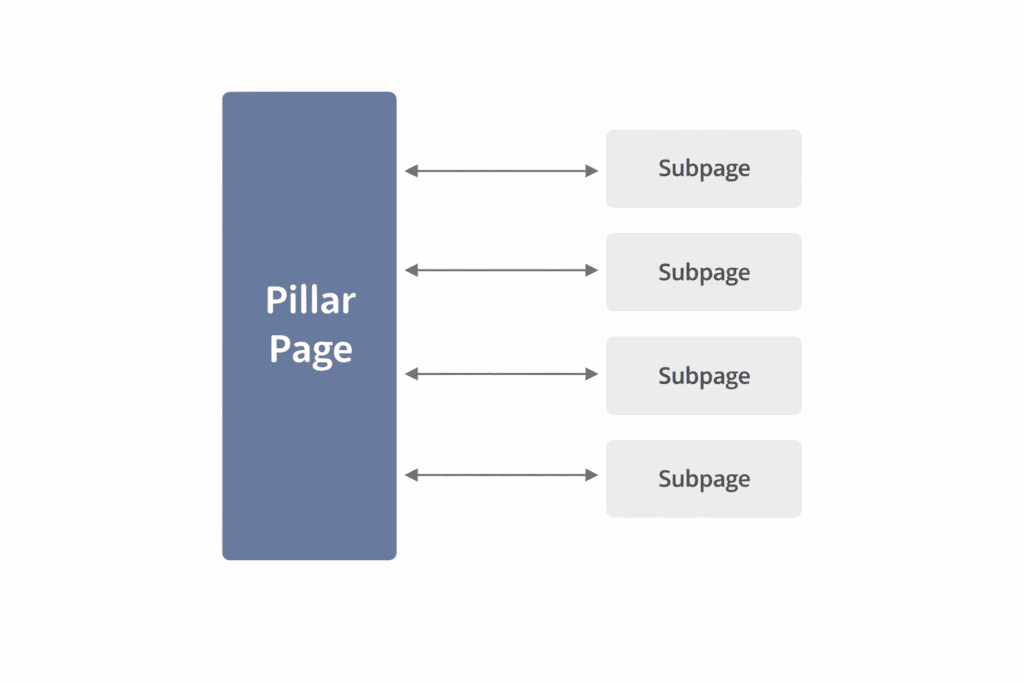
Subpages are the supporting content.
Each subpage targets one specific subtopic.
Each subpage answers one primary intent.
Each subpage links back to the pillar.
No overlap.
No keyword cannibalization.
Real World Topic Cluster Example
If your pillar page is Editorial SEO, your subpages might cover content briefs, SERP analysis, internal linking, optimization workflows, and performance tracking.
Together, they form authority.
How Topic Clusters Work
Pillar Page as the Authority Anchor
The pillar page acts as the central authority node.
It tells Google what the topic is.
It defines scope.
It distributes authority to subpages through internal links.
Subpages as Intent Focused Support
Subpages go deep.
They rank for long tail queries.
They answer specific questions.
They capture demand the pillar cannot.
This is how clusters rank for hundreds of keywords, not just one.
Internal Linking Signals Explained
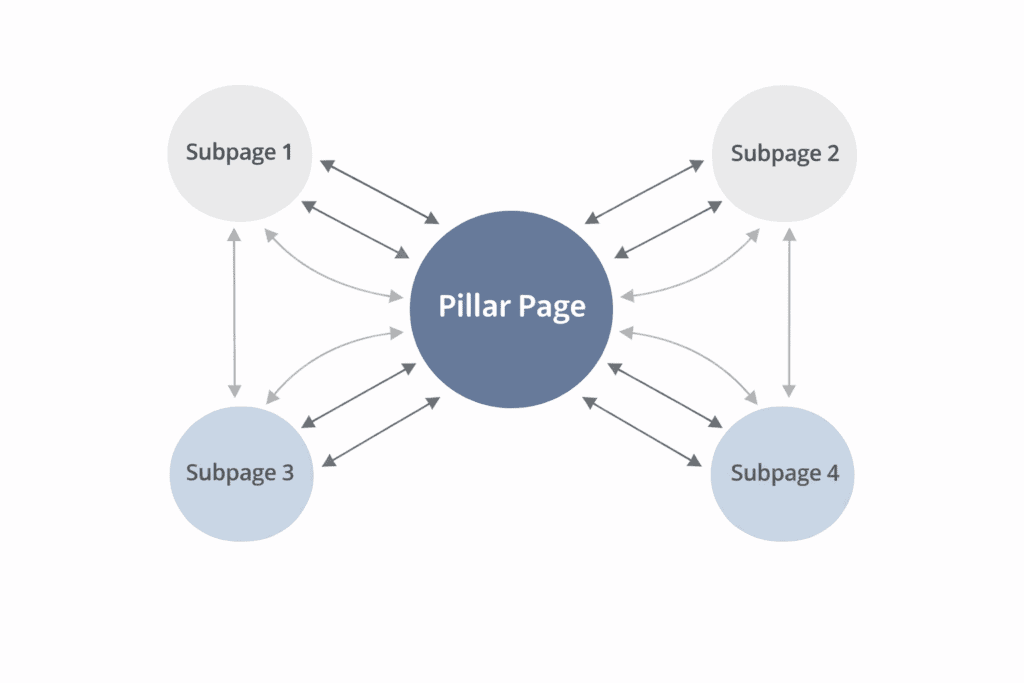
Internal links are the glue.
Pillar to subpage links signal structure.
Subpage to pillar links reinforce authority.
Related subpage links strengthen relevance.
Without internal links, you do not have a topic cluster.
How Google Interprets Topic Clusters
Google evaluates relevance across pages, depth of coverage, semantic relationships, and link structure.
Topic clusters make this evaluation easy.
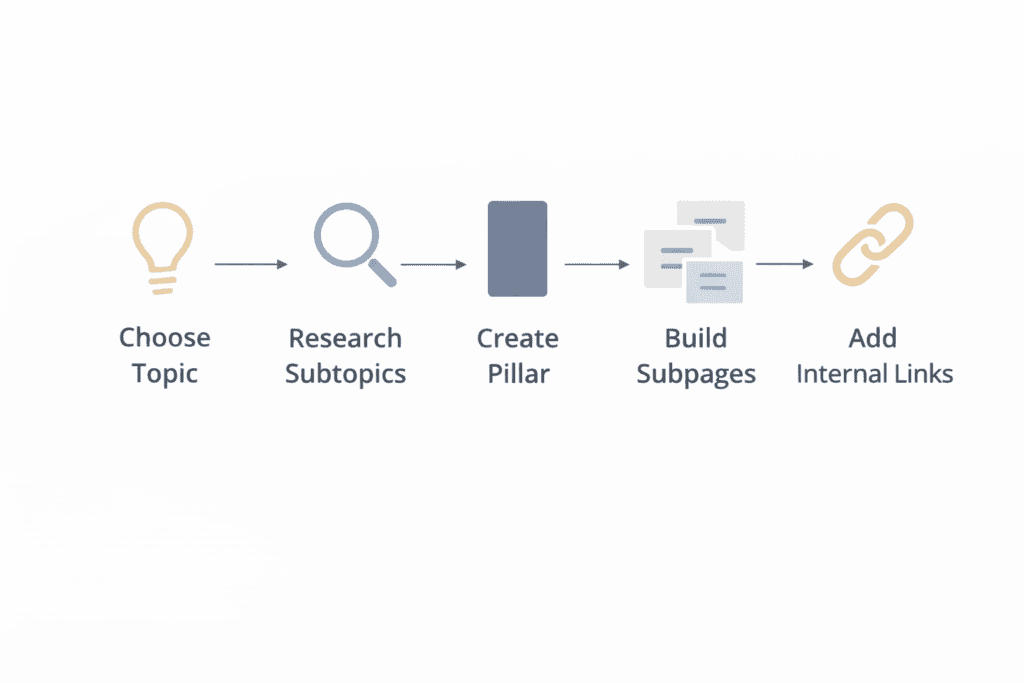
Step by Step: How to Build Topic Clusters That Rank
Step 1. Choose a Core Topic
Your core topic must meet three criteria.
It must have search demand.
It must support multiple subtopics.
It must matter to your business.
How Broad a Core Topic Should Be
Too broad and you cannot compete.
Too narrow and you cannot scale.
A good rule is this. If the topic can support 8 to 20 subpages, it works.
Aligning Topics With Search Intent
Do not build clusters around vague ideas.
Build clusters around problems people search for.
Step 2. Research Subtopics
This step determines whether your cluster succeeds.
SERP and Competitor Analysis
Look at page one results.
What subtopics appear repeatedly?
What questions show up?
What formats rank?
This tells you what Google expects.
People Also Ask and Related Searches
These are free subtopic ideas straight from Google.
They reveal intent patterns and informational gaps.
Grouping Keywords by Intent
Do not group by keyword similarity.
Group by intent.
One page per intent. Always.
Step 3. Identify Pillar Pages and Subpages
Now you assign roles.
Pillar Page Requirements
Broad coverage
Clear structure
Links to all subpages
Optimized for the main topic
One Intent per Subpage
Each subpage should answer one main question.
If a page tries to rank for multiple intents, it will rank for none.
Avoiding Keyword Cannibalization
If two pages target the same intent, merge or redefine them.
Clusters work because roles are clear.
Step 4. Create High Quality Content
Content quality still matters.
Structure matters more.
Answer First Content Structure
Lead with the answer.
Expand with context.
Support with examples.
This helps users and AI systems.
Depth vs Breadth Rules
Pillar pages go broad.
Subpages go deep.
Never reverse this.
Formatting for Scanability
Short paragraphs
Clear headings
Bullet points
Logical flow
Make it readable.
Step 5. Add Internal Links
This is the most ignored step and the most important.
Pillar to Subpage Linking
Your pillar must link to every subpage.
No exceptions.
Subpage to Pillar Linking
Every subpage must link back to the pillar.
This closes the loop.
Related Subpage Cross Links
When relevant, link subpages to each other.
This strengthens topical relationships.
Anchor Text Best Practices
Use descriptive anchors.
Avoid generic text.
Match intent naturally.
Step 6. Measure Topic Cluster Performance
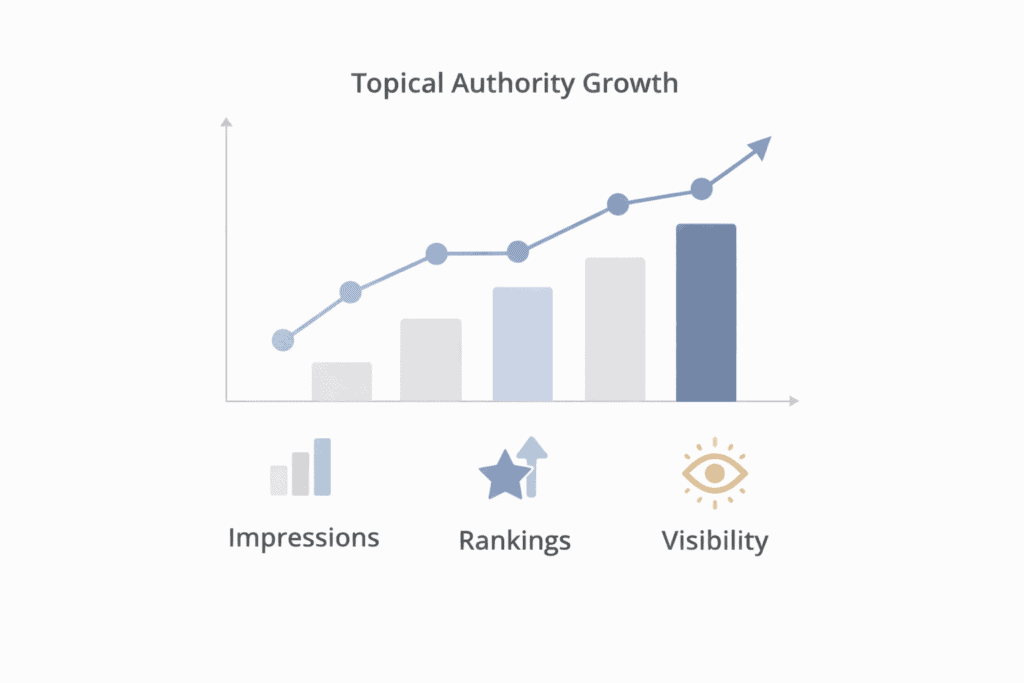
Stop measuring single pages.
Google Search Console Metrics
Track impressions across all cluster URLs.
Growth here means authority is building.
Keyword Footprint Growth
Count how many keywords the cluster ranks for.
This matters more than position one rankings.
Authority and Visibility Signals
Look for rising impressions, more ranking pages, and better average positions.
These compound over time.
How to Build a Topic Cluster in 10 Minutes
When a Fast Topic Cluster Makes Sense
This method is ideal when you are validating a topic, need speed, or are expanding an existing site.
It is not for hyper competitive niches.
Step 1. Choose a Topic
Pick one clear topic with demand.
No overthinking.
Step 2. Do Topical Research Using Wikipedia
Wikipedia tables of contents are gold.
They show how topics naturally break down.
Each section can become a subpage.
Step 3. Expand Subtopics Quickly
High Volume Question Keywords
Look for what is, how, and why queries.
These are perfect spokes.
Content Formats That Rank
Guides
Checklists
Comparisons
Templates
Match format to intent.
Keywords That Trigger Featured Snippets
Definition queries
Step-based queries
List queries
These work well for answer engines.
Step 4. Build a Simple Topic Cluster Plan
Group Subtopics by Intent
Merge overlapping ideas.
Assign Pillar vs Subpages
One pillar.
Many spokes.
Map Internal Links
Plan links before writing.
Execution becomes easy.
Topic Cluster Examples
Health Focused Educational Clusters
These clusters dominate because they cover topics comprehensively and answer real questions at scale.
Product Led Content Clusters
These clusters align education with conversion without being salesy.
Programmatic Content Clusters
These programmatic clusters win through scale, structure, and internal linking density.
The common thread is structure, not luck.
Tools You Can Use
Keyword and SERP Research Tools
Use tools to understand demand, not to chase numbers.
Content Mapping and Planning Tools
Spreadsheets and Notion work fine.
Clarity beats complexity.
Performance Tracking Tools
Search Console is non-negotiable.
Track topics, not pages.
Common Topic Cluster Mistakes
Choosing Topics That Are Too Broad
If you cannot realistically build authority, do not start.
Writing Pages Without Internal Links
No links means no cluster.
Treating Pillar Pages Like Blog Posts
Pillars are resources, not opinions.
Overlapping Keywords Across Pages
Overlap kills performance.
Measuring Pages Instead of Topics
Authority compounds at the topic level.
FAQs
Are Topic Clusters, Content Hubs, and Pillar Pages the Same Thing?
They are related but not identical.
Topic clusters describe the system.
Pillar pages are one component.
What Is a Topic in SEO?
A topic is a group of related search intents, not a single keyword.
How Many Pages Should a Topic Cluster Have?
Most clusters work best with 8 to 20 pages.
Can You Add Topic Clusters to an Existing Site?
Yes. Most high performing clusters start this way.
Do Topic Clusters Still Work in 2026?
They work better than ever because search engines now prioritize topical understanding.
Final Takeaways
Topic Clusters Build Authority, Not Just Traffic
Traffic follows authority.
Internal Linking Is the Multiplier
Content without links is wasted effort.
Start Small and Scale Intentionally
One strong cluster beats ten weak posts.